The Switch.
In 2025 consumers shifted $0.5 trillion in purchases to goods, services and brands they deemed more sustainable. By 2035 this is expected to grow to $3 trillion due to intergenerational wealth transfer, education on issues and digital ubiquity (both for access to information and as a reduced friction switching channel). Consumers aren't doing this because regulators told them to. They're acting because they increasingly understand the issues and are voting with their wallets.
Three forces. One irreversible shift.
The $3 Trillion Switch is not a trend. It is a structural realignment driven by three converging forces that are now impossible to ignore from a boardroom, investment desk, or category strategy perspective. A megatrend is emerging.
Education on issues is growing fast
People are increasingly aware of the issues we face as society. Every level of education has sustainability built into the curriculum; young people are driving the change. Our research shows people aware of issues are 2-3 times more likely to switch how they purchase.
$15 trillion of wealth is changing hands
As wealth moves between generations, so too does decision power. Younger people, armed with more control of spending power across every major category, are transforming the economic landscape. No category will remain untouched; the change will hit in waves.
Digital reduces friction
Digital ubiquity means people have more access to information from more sources; it also makes it easier for them to switch the organizations they advocate, spend with and invest in. This final force is driven by advances in technologies, accelerating the change across all major economies.
The research behind the number.
Consumer demand is quietly re-pricing itself. In 2025, roughly 16 percent of consumers switched at least one brand for sustainability reasons - an estimated $0.4 to $0.8 trillion of annual spending, about 2 percent of the world's contested consumer market. By 2035 we project that pool grows to $2.5 to $3.4 trillion, approximately 8 percent of contested consumer spending: a sixfold increase in a decade.
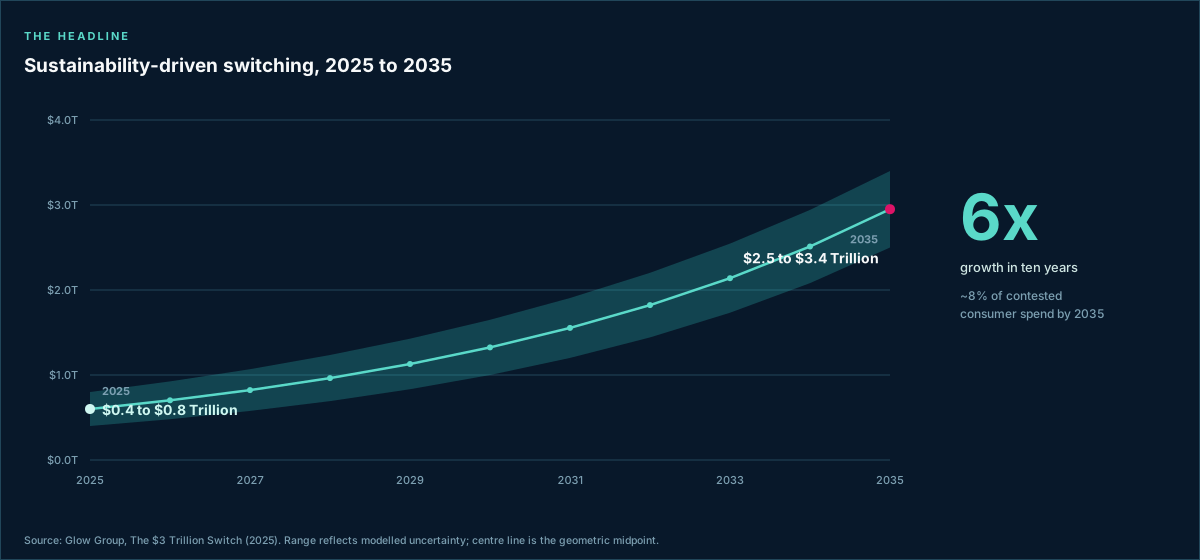
That projection is not a trend line drawn through sentiment surveys. It is the output of three measurable forces converging for the first time:
The wealth transfer
$15 trillion changes hands by 2035, moving spending power to the most issue-literate generations in history.
The knowledge explosion
SDG awareness has doubled since 2019 and is projected to reach two thirds of the population by 2035. Aware consumers switch 2-3 times more.
Digital ubiquity
AI agents research, compare and recommend. A values-driven switch now takes about 15 seconds.
Underneath the forces sits a measurement foundation built over five-plus years, ten-plus studies, three continents and more than eight million interviews - including the calibration that links each point of Social Responsibility Score movement to 0.25 percent of annual revenue growth, validated against $1.4 trillion of sales revenue data across roughly 200 large US brands.
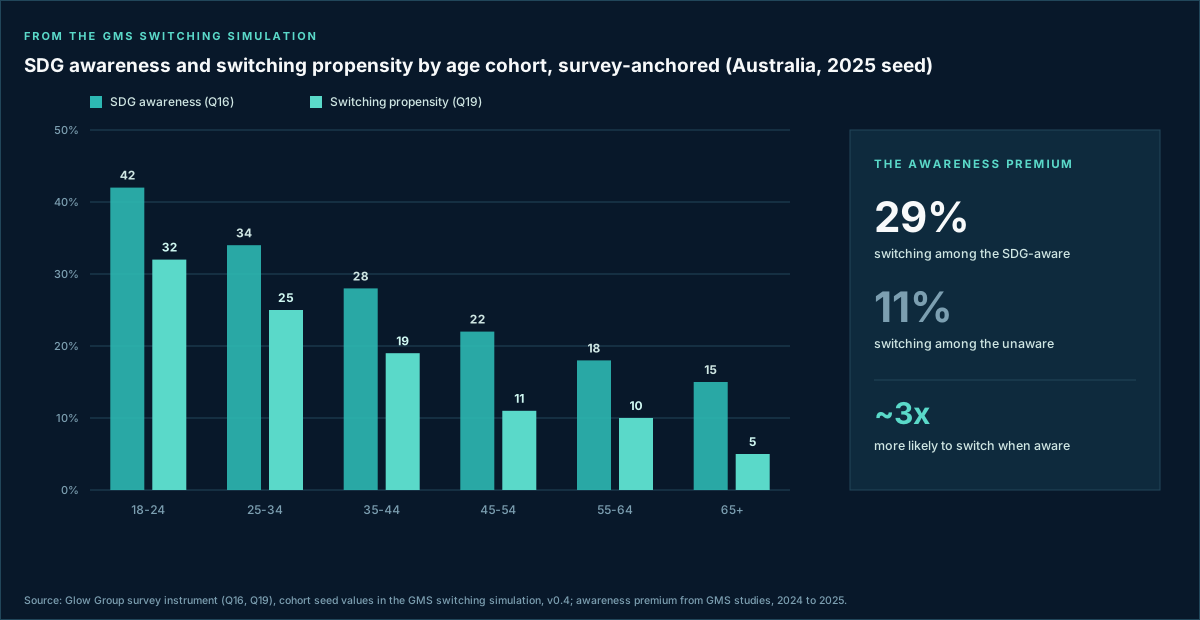
The full paper sets out the sizing chain end to end - from global output to the sustainability-driven demand pool - together with the population-anchored simulation that reproduces the decade forecast from cohort dynamics alone, the sector roll-up, and the research agenda it opens: measuring for-good certification marks, and deploying the same demand signal in capital markets.
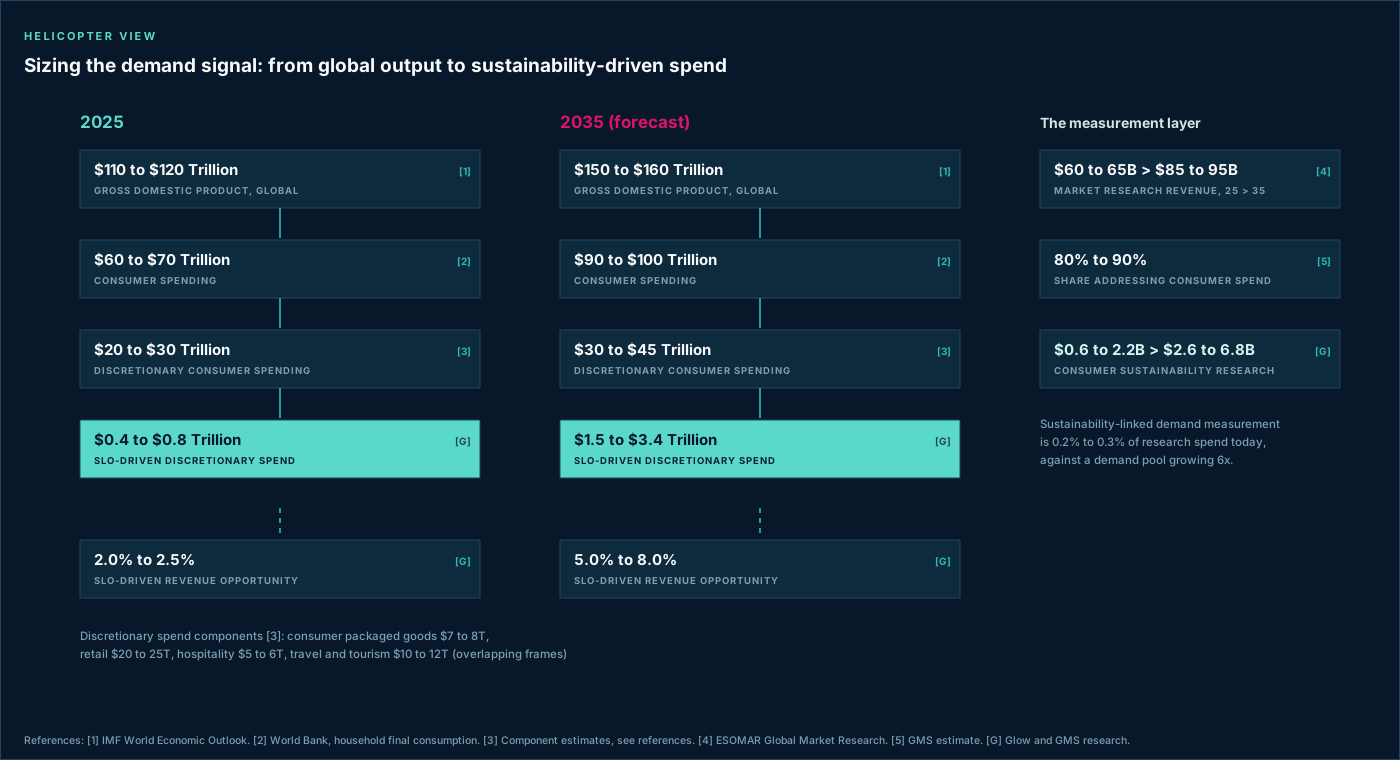
Get the full working paper.
21 pages. Eleven figures. Every number traced to source.
- The complete sizing chain, references and glossary
- The three forces, quantified, with the say-do gap and awareness premium data
- The simulation that derives the 2035 forecast from population dynamics
- What the switch means for incumbents, challengers and the services economy
$3 Trillion Switch - Full Working Paper
Enter your business email and the paper will be sent to your inbox. We will also add you to the GMS newsletter if you opt in.
The $3 Trillion Switch is Issue 01 of Catalyst.
The full quantified analysis - SRS-anchored sizing based on 8m+ consumer interviews in the UK, USA and Australia, validated against $1.4 trillion of sales revenue data - is published in Catalyst, the GMS Institute's public research campaign.